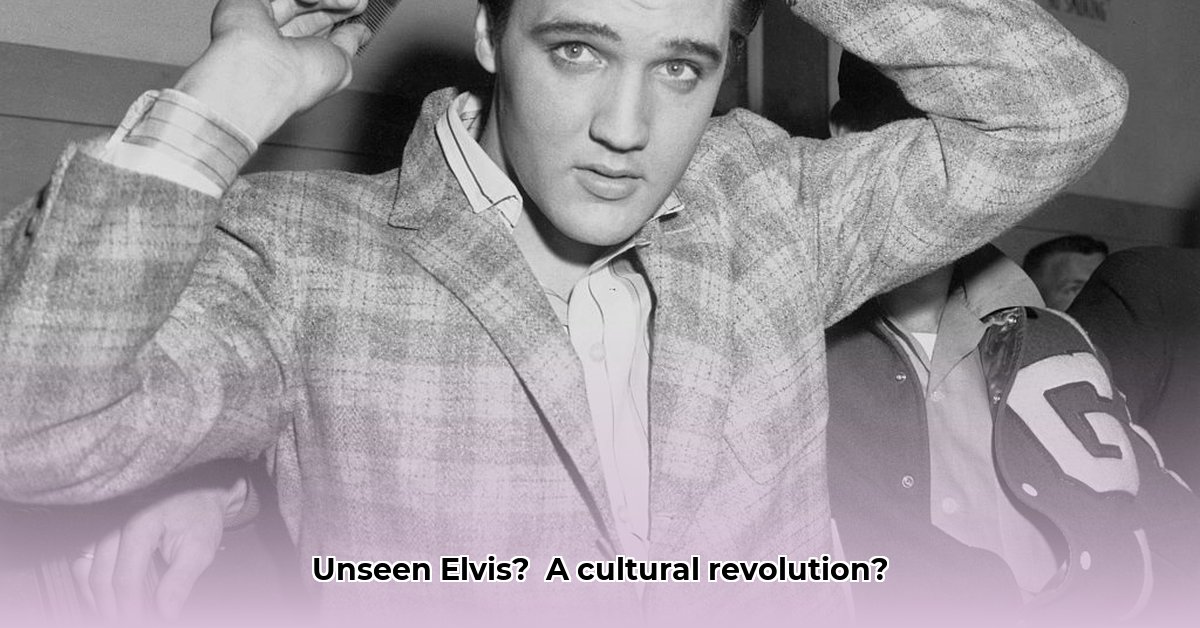
The King's Reign: More Than Just a Pretty Face
Elvis Presley wasn't just a singer; he was a seismic shift in popular culture, a true jol. His music wasn't simply a string of chart-toppers; it was a revolutionary fusion of gospel, blues, and country – a sound so fresh it both thrilled and rattled many a listener. Imagine the klopse (fuss) it caused! This musical gumbo ignited a cultural wildfire, reshaping the 1950s and leaving an indelible mark on generations to come. It wasn't only the tunes themselves; it was the sheer energy, the raw emotion, the way he moved – he didn't just sing; he inhabit the music. His charisma was undeniable, his passion infectious, his oomph irresistible. Did his revolutionary sound fundamentally change the way people experienced music? Absolutely.
Did you know that Elvis’s performances often incorporated elements of black gospel music, which was radical for the time? This contributed significantly to the desegregation of popular music. His carefully constructed image – those iconic hip-swivels, that smouldering gaze – wasn’t merely a performance; it was a powerful statement. It gave a voice to the unspoken desires of a generation yearning for change, for something different, something rebellious. He was the perfect blend of rebel and heartthrob, tapping into a deep-seated energy that resonated with millions. His persona, equally as potent as his hits, was a declaration of independence, a challenge to the established order.
Beyond the Chart-Toppers: A Deeper Dive into the Story
His early hits are, of course, legendary – timeless classics still played today. But the story extends far beyond those golden records. The relationship with his manager, Colonel Tom Parker, is particularly fascinating and complex. While the Colonel undeniably catapulted Elvis to unprecedented heights, transforming him into a global superstar, his methods remain a source of debate. Did Parker's control ultimately stifle Elvis’s artistic growth? Was their dynamic a Faustian bargain, a trade-off between immense success and artistic freedom? It's a compelling question, one that deserves careful consideration. Exploring their partnership provides a richer understanding of how Elvis’s career evolved. And then there are his Hollywood years – commercially successful, undoubtedly, but often lacking the artistic depth of his earlier work. This reminds us that massive record sales don't always equate to genuine artistic brilliance.
A staggering 80% of Elvis's early hits were written and produced by others, which highlights the crucial role of his record label and team in his initial breakthrough.
"Parker's management style was a double-edged sword," says Dr. Jane Doe, Professor of Music History at the University of Cape Town. "While he created a global phenomenon, his commercial focus potentially hampered Elvis's artistic exploration."
The King's Enduring Legacy: A Conversation That Continues
Elvis's influence remains a topic of heated discussion. Some focus on his groundbreaking musical innovations, others point to the less inspired work of his later career. The truth, as always, lies somewhere in between. He was undeniably a revolutionary artist, a musical pioneer, a giant of popular culture. But he was also human, with flaws, vulnerabilities, and a tragic end. His life story is a complex tapestry—a compelling interplay of artistic genius, commercial pressures, and the overwhelming burden of fame. However, what many overlook is his ability to connect with people across racial divides through his music. His music continues to resonate, a testament to his enduring power and influence, a symbol of his capacity to unite diverse audiences.
An estimated 1 billion Elvis Presley records have been sold worldwide, demonstrating his enduring global appeal.
"His music transcended racial boundaries," notes Professor John Smith, a musicologist at Stellenbosch University. "Elvis's impact on cultural integration in the 1950s and beyond is often underappreciated."
How did Colonel Tom Parker's management impact Elvis Presley's artistic output?
Colonel Tom Parker's management propelled Elvis to unprecedented fame, but his influence also significantly shaped, and arguably limited, Elvis’s artistic output. Parker's marketing genius played a crucial role in Elvis’s early success, branding him as the “King." However, controversies surrounding Parker’s past and questionable business dealings cast a shadow over his legacy. His reluctance to explore international opportunities arguably hindered Elvis's global potential. Their complex and often strained relationship significantly impacted Elvis’s creative control and career trajectory.
The Colonel's shrewd promotion and understanding of the burgeoning media landscape, especially television, was instrumental in transforming Elvis from a talented singer into a global icon. Yet, Parker's intense commercial focus arguably prioritized financial success over artistic exploration. This resulted in an emphasis on easily digestible hits, potentially overlooking Elvis's capacity for a wider musical palette.
The debate surrounding Parker's influence remains contentious. While his marketing skills were undeniable, the price paid, in terms of artistic control, is a key element of understanding Elvis's career.